
Evidence-based therapy for eating disorders that supports meaningful, lasting recovery.
Enhanced Cognitive Behavioural Therapy (CBT-E) is considered the leading evidence-based psychological treatment for eating disorders and is recommended internationally for adults experiencing a range of eating difficulties. It was developed specifically to understand and treat the psychological processes that keep eating disorders going, helping people move beyond symptoms and towards a more flexible, fulfilling relationship with food, their body and themselves.
At Food For Thought Therapy, CBT-E isn’t simply about changing eating habits or following a treatment programme. Recovery begins by understanding your experiences, recognising the role the eating disorder has played in your life and creating a shared plan that is grounded in research while remaining responsive to your individual needs, goals and values.
Whether you’ve recently begun struggling with food or have lived with an eating disorder for many years, therapy offers an opportunity to understand what has been maintaining those patterns and to gradually develop new ways of responding that support lasting recovery.
What is CBT-E?
Eating disorders often appear to be about food, eating or weight, but they are rarely only about those things.
Many people describe the eating disorder as providing something important at different points in their lives. It may have offered a sense of control during uncertainty, helped manage overwhelming emotions, created structure during periods of chaos or become closely linked with identity, achievement or self-worth.
CBT-E recognises that these experiences are rarely random. Rather than focusing only on eating behaviours, it helps us understand the psychological and behavioural patterns that continue to maintain the eating disorder. These commonly include dietary restraint, body image concerns, perfectionism, mood intolerance and the over-evaluation of weight, shape or eating.
Instead of asking, “Why can’t I just stop?”, therapy invites a different perspective:
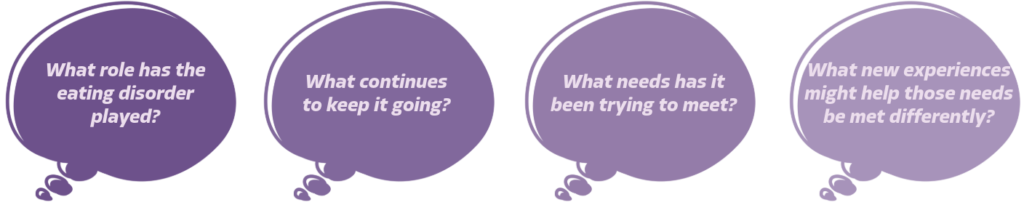
Understanding these questions allows us to develop a treatment plan that is both evidence-based and deeply personalised.
How I Think About Recovery
Recovery is about far more than changing eating habits.
Eating disorders rarely develop without reason. For many people, they begin as understandable attempts to cope with overwhelming emotions, uncertainty, perfectionism, difficult life experiences or a need for safety and control. Although these strategies often become increasingly restrictive and distressing over time, recognising that they once served a purpose allows us to approach recovery with curiosity rather than self-blame.
My role isn’t to take those coping strategies away before we’ve understood what they are doing for you. Instead, we’ll work together to understand the role the eating disorder has played while gradually building new ways of meeting those same needs.
Recovery isn’t simply about eating differently. It’s about developing a different relationship with yourself.
I also recognise that recovery is rarely linear. There will often be periods of progress alongside moments that feel more difficult. Rather than viewing setbacks as failure, we’ll approach them with curiosity, using them to better understand what your mind and body need and to strengthen your recovery over time.
How I Use CBT-E
CBT-E has one of the strongest evidence bases for treating eating disorders, but effective therapy is about much more than following a treatment manual.
Research helps us understand what is likely to work. Therapy helps us understand what is most likely to work for you.
Together, we’ll create a shared map of your experiences, exploring how different pieces fit together, what may be maintaining the eating disorder and where meaningful opportunities for change exist. That understanding guides every decision we make throughout therapy.
Depending on your needs, therapy may include behavioural experiments, establishing regular eating patterns, body image work, addressing perfectionism, emotion regulation, behavioural exposure and relapse prevention. Where appropriate, I also integrate approaches such as Compassion Focused Therapy, Acceptance and Commitment Therapy (ACT), Schema Therapy and EMDR, ensuring treatment remains both evidence-based and individually tailored.
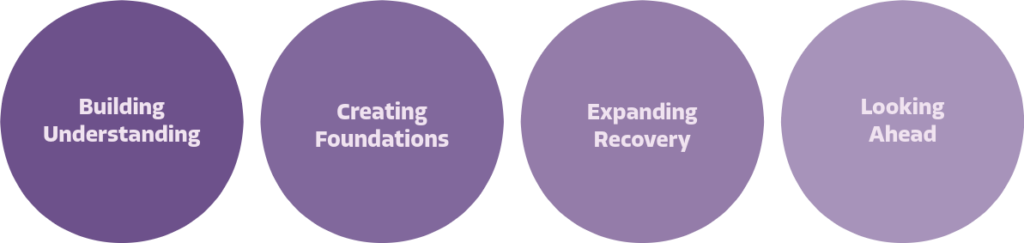
What Happens During CBT-E?
What Can CBT-E Help With?
Enhanced Cognitive Behavioural Therapy (CBT-E) has a strong evidence base across a broad range of eating difficulties. Within my practice, CBT-E is commonly used to support people experiencing:
- Anorexia Nervosa
- Bulimia Nervosa
- Binge Eating Disorder (BED)
- OSFED (Other Specified Feeding or Eating Disorder)
- Disordered Eating
- Chronic Dieting & Restrictive Eating
- Body Image Difficulties
The Evidence Behind CBT-E
CBT-E is recognised internationally as one of the leading evidence-based treatments for eating disorders and is recommended within national and international clinical guidelines. Research consistently demonstrates its effectiveness across anorexia nervosa, bulimia nervosa, binge eating disorder and OSFED.
Evidence-based practice, however, involves more than research alone. It combines the best available scientific evidence with clinical expertise and your individual experiences, preferences and goals. This allows therapy to remain both scientifically informed and genuinely personalised.
Food For Thought
An eating disorder can gradually make life smaller whilst food, weight, shape and eating disorder rules take up more and more space. If they occupied less of your day, what would you want to have room to grow in their place?
A Note from Agi
One of the most meaningful parts of this work is seeing people gradually create more space for themselves alongside, and eventually beyond, the eating disorder. Eating disorders can become deeply woven into identity, safety, coping, achievement or control, so recovery is rarely as simple as changing what somebody eats.
Food matters, and restoring more flexible and adequate eating is often an important part of therapy. But recovery can also mean understanding what the eating disorder has come to represent or provide, loosening rules that have made life increasingly narrow, and discovering other ways of meeting needs that the eating disorder may have been trying to manage.
For me, good therapy holds both. There is space for compassion and curiosity about why the eating disorder makes sense, alongside evidence-based work that supports meaningful change. My hope is that therapy becomes somewhere people can feel understood without the eating disorder being left unchallenged, and supported in building a life where food, weight and shape no longer need to carry quite so much responsibility for how they feel about themselves or how they live.
Frequently Asked Questions
Is CBT-E different from standard CBT?
Yes. Although CBT-E is based on the principles of Cognitive Behavioural Therapy, it was developed specifically for the treatment of eating disorders. While standard CBT explores the relationship between thoughts, emotions and behaviours across a range of psychological difficulties, CBT-E focuses on the specific psychological and behavioural patterns that maintain eating disorders, such as restrictive eating, binge eating, body image concerns, perfectionism and rigid rules around food. It provides a structured, evidence-based framework while remaining flexible enough to be tailored to your individual experiences.
What eating disorders can CBT-E help with?
CBT-E has a strong evidence base across a broad range of eating difficulties. Within my practice it is commonly used to support people experiencing:
- Anorexia Nervosa
- Bulimia Nervosa
- Binge Eating Disorder (BED)
- OSFED (Other Specified Feeding or Eating Disorder)
- Disordered Eating
- Chronic Dieting & Restrictive Eating
- Body Image Difficulties
You do not need to fit neatly into one diagnosis for therapy to be helpful. Many people seek support because they recognise that food, eating or body image has begun to take up more space in their lives than they would like.
Do I need a diagnosis before starting CBT-E?
No. Many people come to therapy without a formal diagnosis, and that’s absolutely okay. Therapy focuses on understanding your experiences rather than fitting them into a particular label. During our assessment we’ll explore your difficulties together and decide whether CBT-E is likely to be the most appropriate evidence-based approach for you.
Will therapy only focus on food?
No. Although restoring a healthier relationship with food is an important part of recovery, eating disorders rarely exist in isolation. Therapy also explores the emotional, psychological and behavioural processes that may be maintaining the eating disorder, including perfectionism, self-esteem, body image, coping strategies, relationships and life experiences where relevant.
Will I be expected to gain weight?
Not everyone who accesses CBT-E requires weight restoration. The goals of therapy depend on your individual presentation and needs. Where nutritional rehabilitation is clinically indicated, we’ll discuss this openly and work collaboratively at a pace that feels safe while always keeping your physical health in mind. If appropriate, I may also recommend working alongside your GP, dietitian or other healthcare professionals to ensure you receive comprehensive care.
How long does CBT-E usually take?
The length of therapy depends on your individual circumstances and goals. Standard CBT-E is often delivered over around 20 sessions for people who are not significantly underweight, while treatment for anorexia nervosa or more complex presentations may require a longer course of therapy. We’ll review progress regularly and adapt treatment together as needed.
What if I’ve struggled with an eating disorder for many years?
Many people worry that they’ve been unwell for “too long” for therapy to help. In reality, recovery is possible at many stages of life. Whether your eating difficulties developed recently or have been present for many years, therapy focuses on understanding what continues to maintain them today and identifying new opportunities for change.
Can CBT-E be adapted for autistic people or people with ADHD?
Absolutely. My practice is proudly neurodiversity-affirming, and I recognise that sensory differences, routines, interoception, executive functioning and masking can all influence the experience of eating disorders and recovery. Therapy is adapted to work with your neurotype rather than expecting you to fit a standard approach, while remaining grounded in the evidence base for CBT-E.
Can CBT-E be combined with other therapies?
Yes. Although CBT-E provides the core framework for eating disorder treatment, some people benefit from integrating additional evidence-based approaches such as Compassion Focused Therapy (CFT), Acceptance and Commitment Therapy (ACT), Schema Therapy or EMDR. Any integration is guided by your individual formulation, goals and the best available evidence, rather than using multiple therapies for the sake of it.
Do you offer CBT-E online?
Yes. I offer CBT-E both online across the UK and in person from my clinics in Menai Bridge and Llandudno, North Wales. Research suggests that CBT-E can be delivered effectively online for many people, allowing you to access specialist eating disorder therapy from the comfort of your own home if preferred.
What if part of me wants recovery, but another part doesn’t?
This is one of the most common experiences in eating disorder recovery. Many people describe feeling torn between wanting life to be different and feeling frightened about letting go of behaviours that have provided safety, predictability or a sense of control. Rather than seeing this as resistance or a lack of motivation, we’ll approach it with curiosity and compassion. Therapy provides space to understand both parts of that experience so that change doesn’t feel forced, but becomes something you can move towards with greater confidence and understanding.
How Do We Start?
If you’re considering CBT-E and would like to explore whether it’s the right approach for you, you’re welcome to book a free 15-minute discovery call or arrange an initial assessment.
Together, we’ll develop a shared understanding of your experiences, discuss your goals and explore the evidence-based approaches most likely to support meaningful, lasting change.
Whether you’re looking for support with anorexia nervosa, bulimia nervosa, binge eating disorder, OSFED, disordered eating, chronic dieting or body image difficulties, therapy begins with understanding your experiences and creating a personalised plan for recovery.