
Evidence-based CBT for anxiety, panic, OCD, emetophobia, health anxiety, specific phobias, depression and low self-esteem.
Cognitive Behavioural Therapy (CBT) is one of the most extensively researched psychological therapies and is recommended by the National Institute for Health and Care Excellence (NICE) for many common mental health difficulties. It helps us understand how thoughts, emotions, behaviours and physical sensations interact, and how understandable coping strategies, such as avoidance, checking, reassurance-seeking or over-analysis, can unintentionally keep emotional difficulties going.
At Food For Thought Therapy, CBT isn’t about “thinking positively” or forcing yourself to challenge every difficult thought. Instead, therapy begins by developing a shared understanding of your experiences before deciding which evidence-based interventions are most likely to help.
Depending on your goals, CBT may include behavioural experiments, behavioural activation, cognitive strategies, mindfulness-based approaches, Exposure and Response Prevention (ERP) or compassion-focused techniques. Every intervention is selected because it fits your experiences, not simply because it fits a diagnosis.
Whether you’re experiencing anxiety, panic attacks, OCD, health anxiety, emetophobia, depression, low self-esteem or a specific phobia, therapy begins by understanding what makes sense about your experiences before working towards meaningful, lasting change.
What Is Cognitive Behavioural Therapy?
Cognitive Behavioural Therapy is based on the understanding that our thoughts, emotions, physical sensations and behaviours constantly influence one another. During difficult periods, it is easy to become caught in patterns that unintentionally maintain anxiety, low mood or fear. These patterns rarely develop without reason. In many cases, they represent understandable attempts to cope, even if they are no longer helping us in the way they once did.
Rather than asking “What’s wrong with me?”, CBT invites us to become curious about what may be keeping the problem going. Together we’ll explore questions such as:
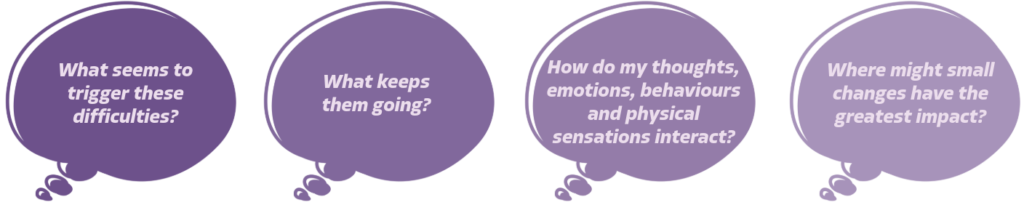
Developing this understanding provides the foundation for effective therapy.
How I Use CBT
CBT has one of the strongest evidence bases of any psychological therapy, but evidence-based practice involves much more than applying the same techniques to everyone. Research tells us what tends to work. Therapy helps us understand what is most likely to work for you.
Before introducing strategies or exercises, we’ll work together to develop a shared map of your experiences. Together we’ll explore what may have contributed to your current difficulties, what continues to maintain them, the strengths you already possess and where meaningful opportunities for change exist.
This shared understanding guides every therapeutic decision we make. Rather than selecting interventions because they fit a diagnosis, we choose them because they address the psychological processes that are maintaining your difficulties.
Depending on your goals, therapy may involve behavioural experiments, behavioural activation, cognitive restructuring, mindfulness-based approaches, Exposure and Response Prevention (ERP), compassion-focused strategies or other evidence-based techniques. Every intervention has a clear rationale and is tailored to your individual needs.
Specialist CBT Within My Practice
Although CBT follows the same evidence-based principles, the way it is applied differs depending on the difficulties you’re experiencing. Within my practice, I have particular expertise in using CBT to treat OCD, emetophobia, health anxiety, panic disorder and specific phobias, adapting treatment to the maintaining processes involved rather than simply applying a generic protocol.
CBT for Obsessive Compulsive Disorder (OCD)
OCD is not simply about intrusive thoughts. Most people experience unwanted thoughts from time to time. The difficulty develops when those thoughts become interpreted as significant or threatening, leading to compulsions such as checking, reassurance-seeking, washing, avoidance, mental review or analysing in an attempt to reduce doubt.
CBT helps us understand this cycle and identify the behaviours that unintentionally keep OCD going. Treatment often includes Exposure and Response Prevention (ERP), one of the most effective behavioural interventions for OCD, alongside cognitive strategies that address responsibility, threat and uncertainty.
I also offer Inference-Based Cognitive Behavioural Therapy (I-CBT), a specialist approach that focuses on how obsessional doubt is created. During assessment, we’ll discuss which evidence-based approach or combination of approaches is most appropriate for your experiences.
CBT for Emetophobia and Specific Phobias
Living with emetophobia is about much more than fearing vomiting. Many people begin avoiding foods, restaurants, travel, social situations, medical appointments or places where leaving quickly feels difficult. Others become highly aware of normal bodily sensations or develop elaborate routines intended to reduce the risk of becoming unwell.
CBT helps us understand how fear is maintained through catastrophic predictions, body monitoring, avoidance and safety behaviours. Treatment often includes carefully planned behavioural experiments and graded exposure, allowing your brain to develop new learning in a safe, collaborative and manageable way.
Exposure is never about forcing you into overwhelming situations or deliberately making you vomit. Instead, it is about helping you gradually reclaim parts of life that fear has taken away.
The same principles can be adapted for other specific phobias, always tailoring therapy to your individual experiences and goals.
CBT for Health Anxiety and Panic
Health anxiety and panic disorder can both lead to cycles of hypervigilance, body checking, reassurance-seeking and avoidance. Although these strategies often reduce anxiety in the short term, they unintentionally reinforce fear over time.
Together we’ll explore how these patterns developed and use behavioural experiments, cognitive strategies and, where appropriate, interoceptive exposure to help you build confidence in your body’s ability to tolerate uncertainty and physical sensations without needing to rely on safety behaviours.
Specialist CBT for Eating Disorders
CBT also provides the foundation for Enhanced Cognitive Behavioural Therapy (CBT-E), one of the leading evidence-based treatments for eating disorders. While CBT-E shares the core principles of Cognitive Behavioural Therapy, it has been specifically developed to understand and treat the psychological processes that maintain eating disorders.
For people experiencing Avoidant/Restrictive Food Intake Disorder (ARFID), I also offer Cognitive Behavioural Therapy for ARFID (CBT-AR), a specialist evidence-informed treatment developed specifically for avoidant and restrictive eating related to sensory sensitivities, fear of aversive consequences or a lack of interest in food.
Understanding Exposure and Response Prevention (ERP)
Exposure and Response Prevention (ERP) is a specialist behavioural intervention commonly used within CBT for OCD and some anxiety-related difficulties.
Exposure involves gradually approaching situations, thoughts, sensations or uncertainties that have become feared or avoided. Response Prevention involves reducing the compulsions or safety behaviours that usually follow, such as checking, reassurance-seeking, washing, avoidance or mental review.
ERP is not about overwhelming you or asking you to tolerate distress without support. Effective ERP is collaborative, carefully planned and guided by a clear understanding of what is maintaining the difficulty. The aim is to create new learning: helping your brain discover that anxiety can reduce naturally without relying on compulsions or avoidance.
CBT for Trauma and PTSD
Trauma and PTSD can leave people feeling as though a past experience is still emotionally present, leading to intrusive memories, avoidance, heightened threat, changes in beliefs about themselves or the world, and understandable attempts to stay safe.
Together we’ll develop an understanding of how the experience continues to affect you and what is keeping the sense of threat going. Trauma-Focused CBT (TF-CBT) may involve working with trauma memories and their meanings, reducing avoidance, updating beliefs shaped by the experience and gradually rebuilding a sense of safety and confidence in the present.
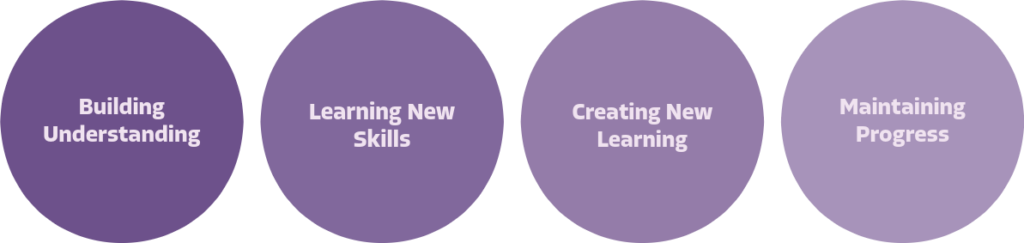
What Happens During CBT?
The Evidence Behind CBT
Cognitive Behavioural Therapy is one of the most thoroughly researched psychological therapies available and is recommended by NICE for many common mental health difficulties, including anxiety disorders, panic disorder, depression, health anxiety, OCD and specific phobias.
Research consistently demonstrates that CBT can reduce symptoms, improve quality of life and help people develop practical skills that continue to benefit them long after therapy has ended.
Evidence-based practice, however, involves more than following research findings alone. It combines the best available scientific evidence with clinical expertise and your individual experiences, values and preferences. My role is to bring these elements together, ensuring therapy remains both scientifically informed and genuinely personalised.
Food For Thought
Sometimes we can understand a pattern perfectly and still feel stuck within it. What might become possible when understanding is paired with opportunities to test something different?
A Note from Agi
One of the things I value most about CBT is that it helps people make sense of experiences that may previously have felt confusing or overwhelming. Understanding alone is rarely enough to create lasting change, but it gives us direction. From there, therapy becomes an opportunity to gently test new ways of responding, building confidence through experience rather than simply hoping things will feel different. My aim is always to ensure that therapy feels collaborative, evidence-based and tailored to you, not something that’s done to you.
Frequently Asked Questions
Is CBT right for everyone?
CBT has a strong evidence base for many psychological difficulties, but no single therapy is right for everyone. During assessment we’ll explore your experiences, goals and preferences before deciding whether CBT, or another evidence-based approach, is likely to be the best fit.
How many CBT sessions will I need?
The number of sessions varies depending on the nature of your difficulties, your goals and your previous experiences of therapy. Some people benefit from brief, focused work, while others with more longstanding or complex difficulties may require longer-term therapy. We’ll review progress regularly and make decisions collaboratively throughout therapy.
Will I have homework?
Rather than “homework”, I think of these as opportunities to apply what we’ve explored in therapy. Research consistently shows that practising new skills between sessions helps strengthen learning and supports longer-term change. Any between-session practice will be collaborative, achievable and tailored to your circumstances.
Can CBT be combined with other therapies?
Yes. Depending on your formulation and goals, CBT can be integrated with approaches such as EMDR, Inference-Based CBT (I-CBT), Schema Therapy, Acceptance and Commitment Therapy (ACT) or Compassion Focused Therapy (CFT). Therapy is guided by your individual needs rather than a one-size-fits-all model.
Does CBT always involve exposure?
No. CBT includes a wide range of interventions. Exposure is used when it is clinically appropriate, particularly for OCD, emetophobia, panic and specific phobias, but therapy may also involve behavioural activation, cognitive strategies, behavioural experiments or compassion-focused work.
What is Exposure and Response Prevention (ERP)?
ERP is a specialist form of CBT used particularly for OCD. It involves gradually approaching feared situations while reducing compulsions or safety behaviours, allowing new learning to take place.
Will I be forced to face my biggest fear?
No. Exposure work is always collaborative and carefully planned. We decide together what feels manageable and clinically appropriate, ensuring therapy progresses at a pace that supports learning rather than overwhelm.
Can CBT help with mental compulsions?
Yes. Mental review, analysing, checking feelings, replaying memories and self-reassurance can all function as compulsions. Therapy helps identify these patterns and develop more helpful ways of responding.
Is CBT or I-CBT better for OCD?
Both are evidence-based approaches that target different aspects of OCD. During assessment we’ll discuss which approach, or combination of approaches, is most appropriate for your presentation and goals.
Can CBT help if my emetophobia affects eating?
Yes. However, if eating restriction appears more consistent with ARFID, we’ll discuss whether CBT-AR may provide a more appropriate framework. The assessment helps us understand the wider picture before deciding on treatment.
Is CBT available online?
Yes. I offer CBT online across the UK, alongside in-person appointments in Menai Bridge (Isle of Anglesey) and Llandudno (Conwy), North Wales.
How Do We Start?
If you’re considering CBT and would like to explore whether it’s the right approach for you, you’re welcome to book a free 15-minute discovery call or arrange an initial assessment.
Together, we’ll develop a shared understanding of your experiences, explore your goals and discuss the evidence-based approaches most likely to support meaningful, lasting change.
Whether you’re looking for support with anxiety, panic disorder, OCD, emetophobia, health anxiety, depression, low self-esteem or specific phobias, therapy begins with understanding your experiences and creating a personalised plan for change.